


Interest During Construction (IDC) in Project Finance: How to Enter the Circular Reference Multiverse
In real estate, project finance, and infrastructure, Interest During Construction (IDC) refers to the interest expense accrued on Debt that is drawn while the asset is under development and does not yet generate cash flows; it is capitalized, increasing the Construction Loan balance, and repaid when it is replaced with a Permanent Loan. It also affects the Depreciation and Debt sizing/sculpting for the project in the operational period.
Interest During Construction Tutorial
What Is Interest During Construction (IDC)?
IDC Definition: In real estate, project finance, and infrastructure, Interest During Construction (IDC) refers to the interest expense accrued on Debt that is drawn while the asset is under development and does not yet generate cash flows; it is capitalized, increasing the Construction Loan balance, and repaid when it is replaced with a Permanent Loan. It also affects the Depreciation and Debt sizing/sculpting for the project in the operational period.
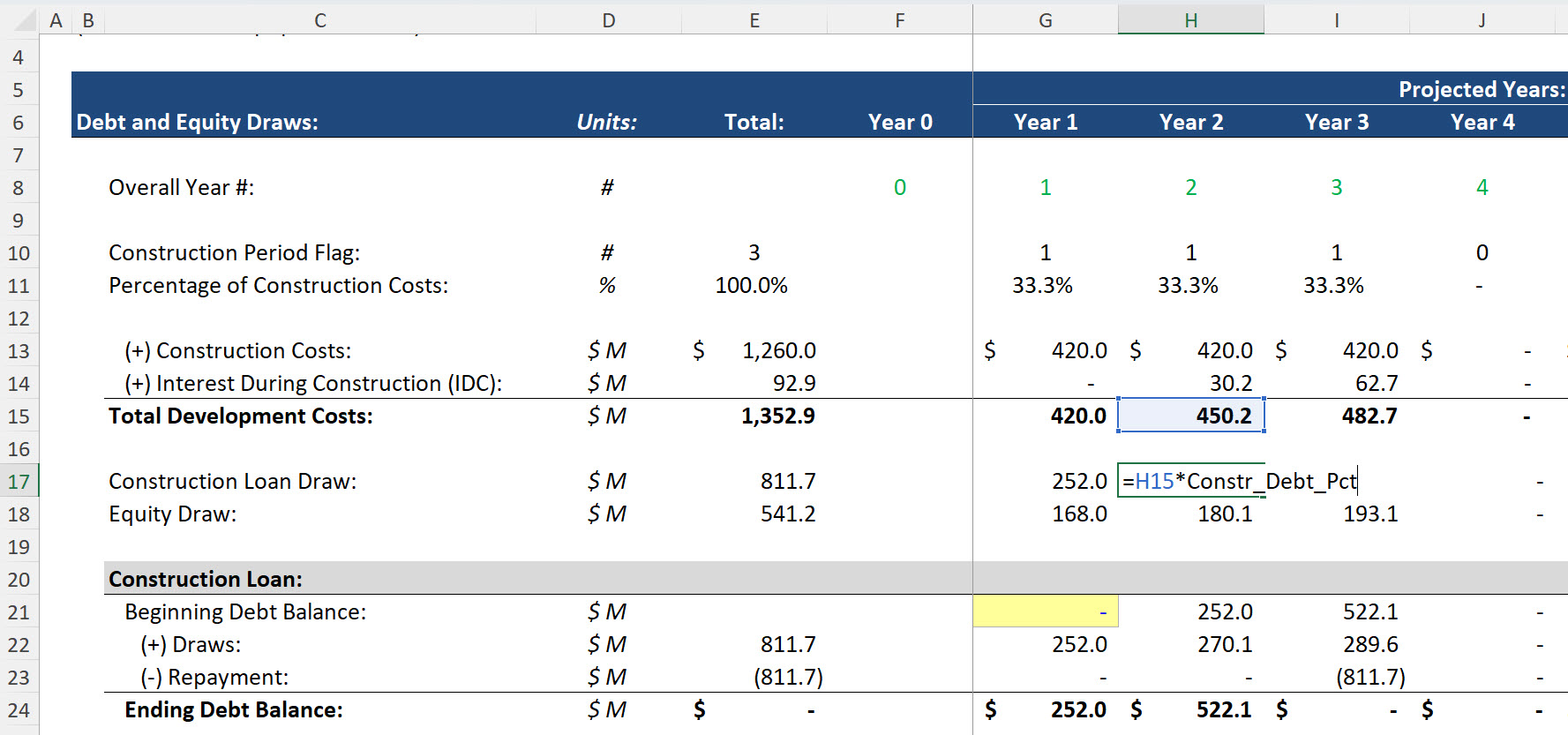
Interest During Construction (IDC) is a central part of all development models in fields like project finance, infrastructure, and real estate.
In these industries, new assets, such as solar plants, data centers, toll roads, and apartment buildings, are always financed with a mix of Debt and Equity.
Debt is cheaper than Equity because interest rates on Debt are lower than the average annualized return that Equity investors expect, but asset owners cannot use 100% Debt to fund new projects.
This is because it’s too risky for the lenders; they want to see a commitment from the Equity investors first or at the same time as theirs.
For example, something like a new solar plant might be funded with 40% Equity and 60% Debt.
There are no issues with using Equity during the development period, but Debt presents a significant one: Lenders expect to earn interest on their loans, but there are no cash flows to pay for this interest until the asset is operational.
One solution is to capitalize the interest to the loan principal, so that all the Interest during this period accrues and must be repaid whenever the loan itself is repaid:
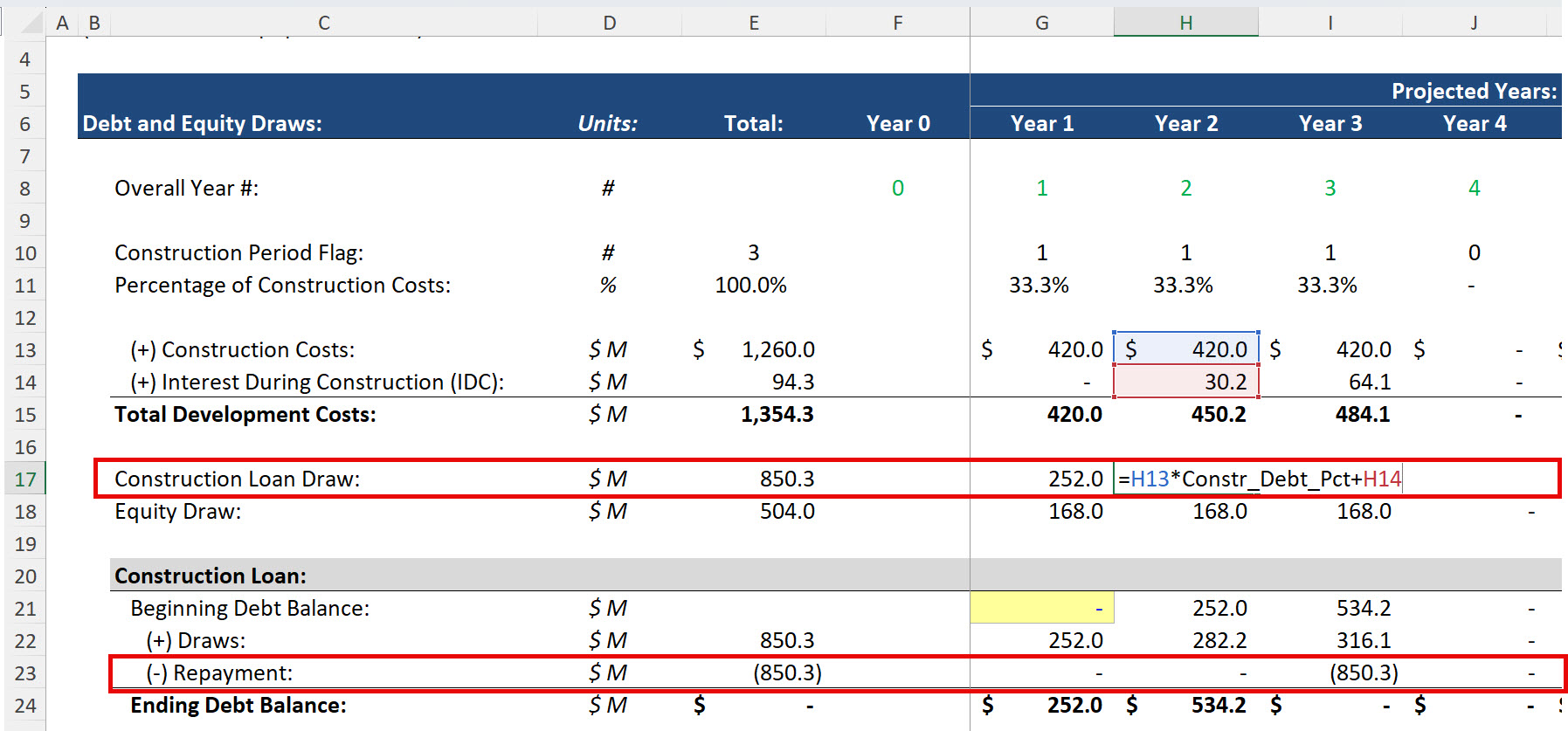
In some cases, this Interest During Construction (IDC) might also be funded partially with Equity, with the rest capitalized to the loan principal (as in the first screenshot above).
The IDC is counted as part of the costs to develop the asset, so as with the official Construction Costs, it is depreciated over the asset’s useful life during the operational period.
This affects the asset’s cash flows and the amount of Debt it might use in this time frame.
Finally, note that the “Construction” part of the “Interest During Construction” name is a bit of a misnomer.
There are different phases to a new development, such as planning vs. permitting vs. construction, and Interest During Construction may be incurred in any or all of them.
Put differently, “During Construction” simply means “Pre-Cash-Flows” for new developments.
Files & Resources:
- Interest During Construction Examples – Simplified (XLSM) | More Advanced with Macro (XLSM)
- Interest During Construction – Presentation Slides (PDF)
Video Table of Contents:
- 0:00: Introduction
- 1:15: The Short Answer
- 4:37: Part 1: IDC Calculations
- 8:29: Part 2: IDC in the Operational Period
- 10:00: Part 3: Circular References
- 13:54: Recap and Summary
How Do You Calculate Interest During Construction (IDC)?
In a simple development model, you normally calculate the Construction Costs in each month/quarter/year of the development period and assume that Debt and Equity fund a certain percentage of them, such as the 60% / 40% example split above.
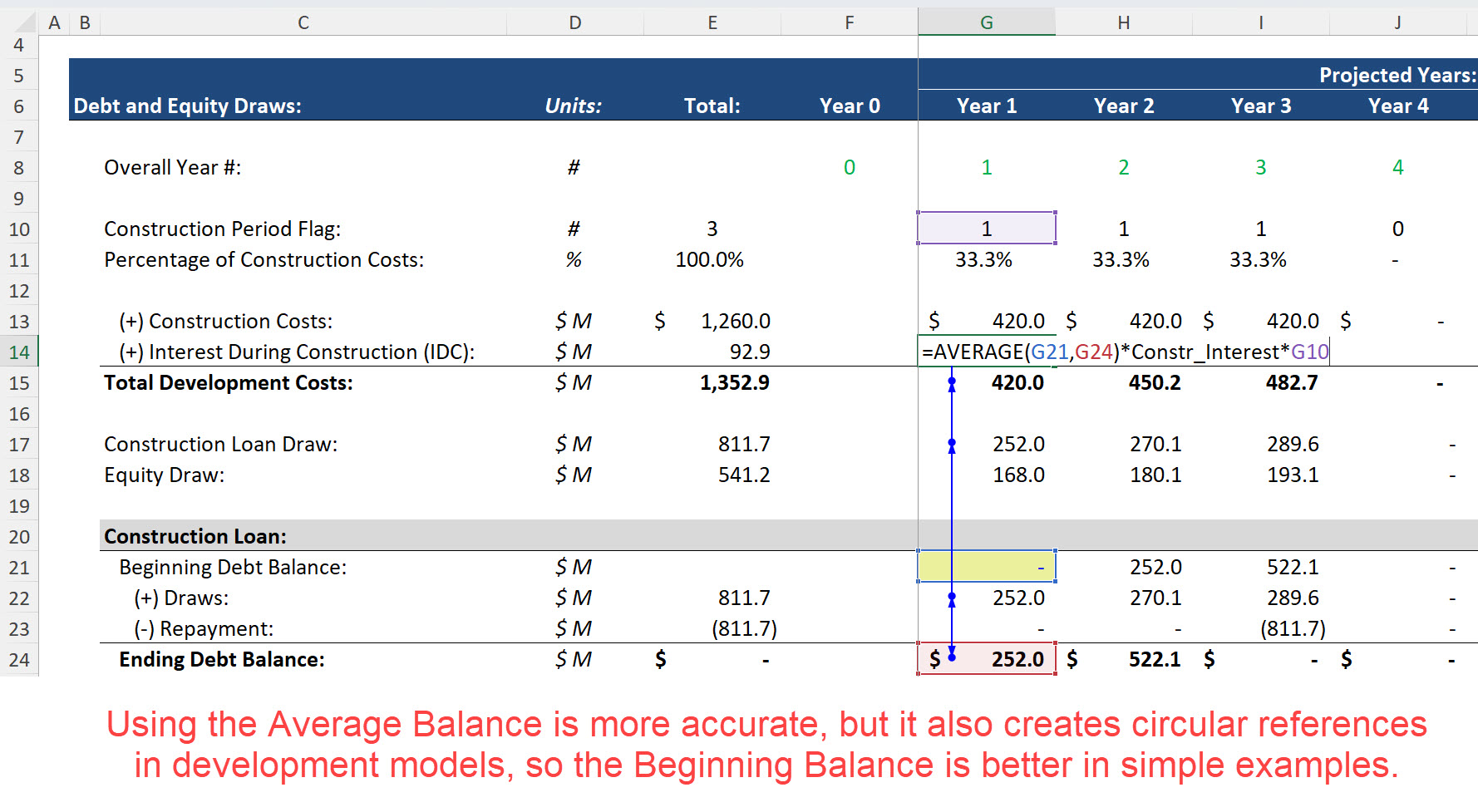
The Interest During Construction is based on the Construction Loan’s Interest Rate * the relevant balance, which could be either the Beginning Balance or the Average Balance over the period.
For example, if the Construction Loan is initially $0 but rises to $100 by the end of the year, the Average Balance is $50, and this is more accurate for the interest calculations than the Beginning Balance of $0.
However, this setup also creates circular references, so you may want to avoid it in basic models:
Once you’ve calculated the IDC and you know the Total Development Costs, you can fund the Total Development Costs with a simple % of Debt and Equity or do something more complex:
- $500 million of Equity will be used for 100% of the costs first, followed by a 60% Debt / 40% Equity split.
- The Construction Costs are funded by 60% Debt / 40% Equity, but all of the IDC is capitalized to the Construction Loan balance.
In this case, we consider the IDC to be another component of the Development Costs and use a simple 60% Debt / 40% Equity split to fund everything:
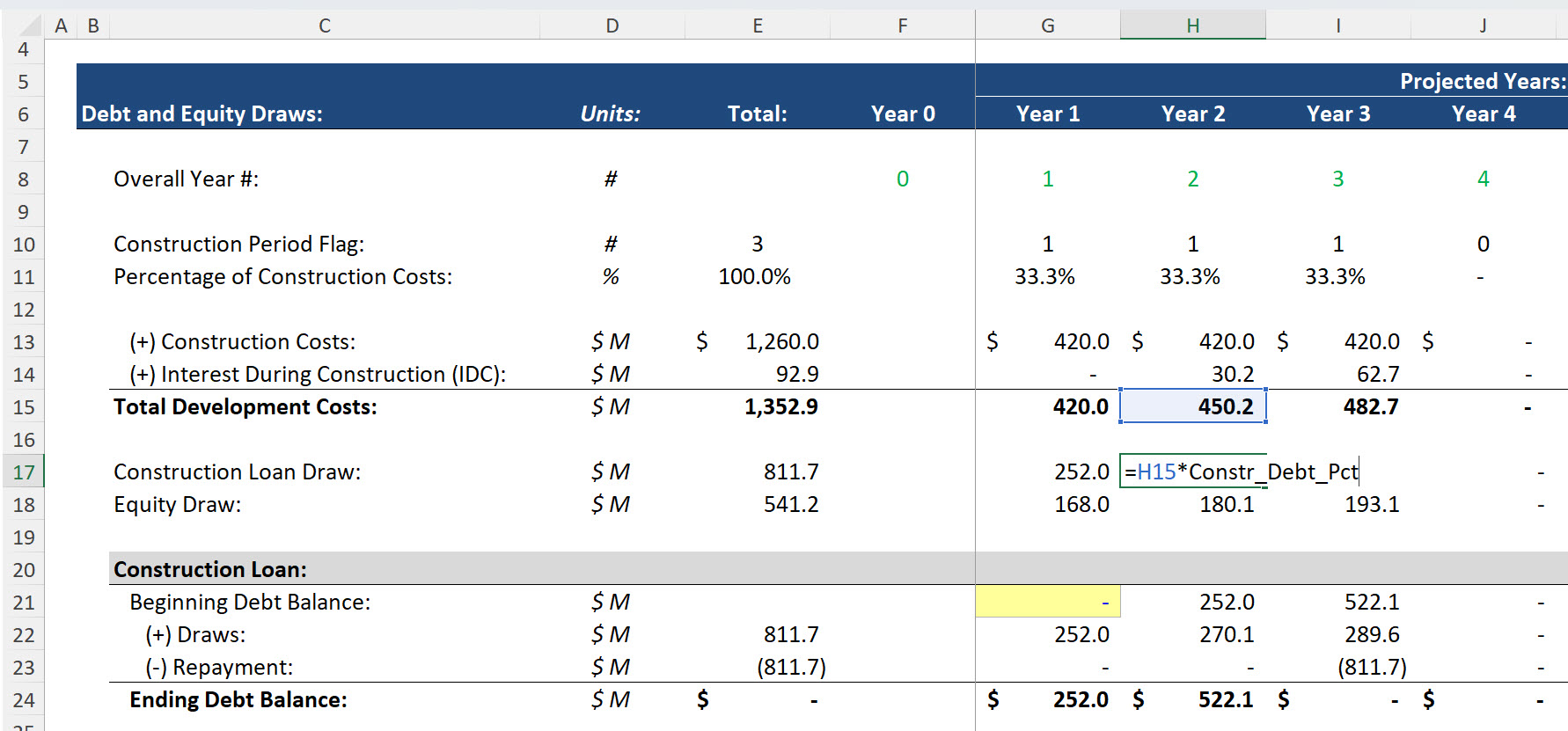
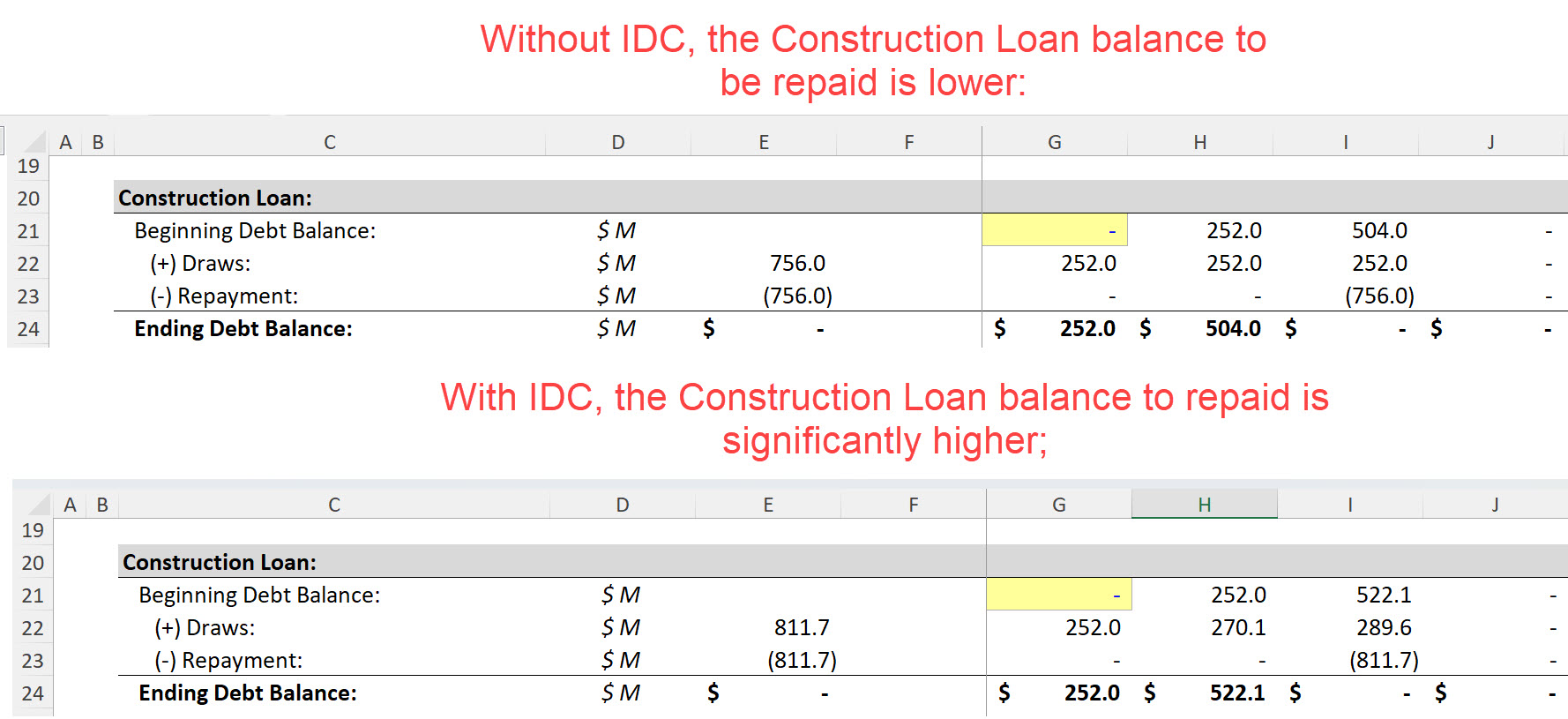
This means only a portion of the IDC accrues to the Construction Loan balance; the Equity investors fund the rest.
When the asset becomes operational, this Construction Loan is refinanced and repaid via a new “Permanent Loan” issuance that remains outstanding in the operational period.
As a result of the IDC, the “Debt Repayment” amount is higher, so the refinancing provides less of a cash-flow benefit:
Where Does IDC Show Up in the Sources & Uses Schedule?
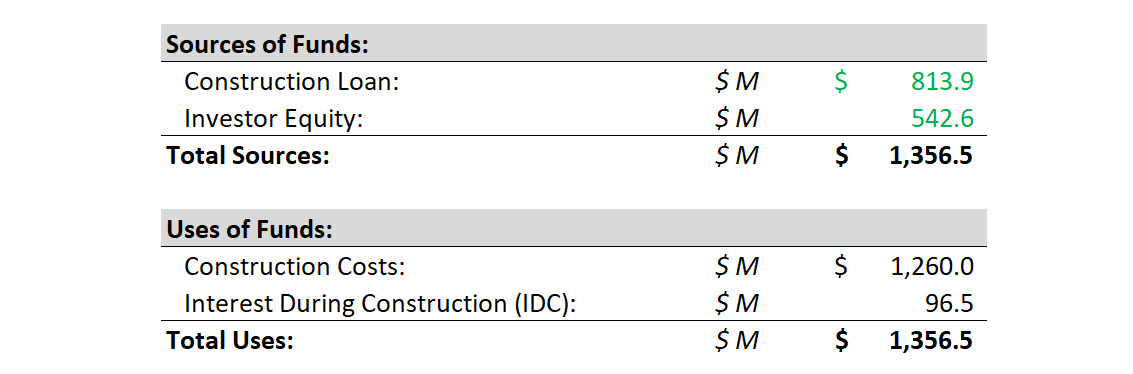
In the Sources & Uses schedule for a development deal, the IDC should appear as another “Use” below the normal Construction Costs:

-
Evaluate infrastructure deals like a pro
You’ll evaluate the risks and rewards and make investment recommendations
-
Master financial modeling
Model solar, wind, gas, nuclear, toll road, airport, and mining assets
-
Complete 8 case studies
Build 4 shorter “crash course” models and 4 detailed “on the job” ones
In more complex models, other types of capitalized expenses might also show up here. For example, Loan Issuance Fees and Commitment Fees are often capitalized for similar reasons (no cash flow to fund them during development).
How to Account for Interest During Construction After Construction
During the operational period, the IDC and other capitalized expenses are depreciated because they correspond to an asset that will be useful for many years.
This means interest during development results in a tax deduction over the asset’s entire useful life, even though the asset owners never paid it in cash.
IDC is normally depreciated on a straight-line basis over the asset’s useful life, as in the 20-year example below:
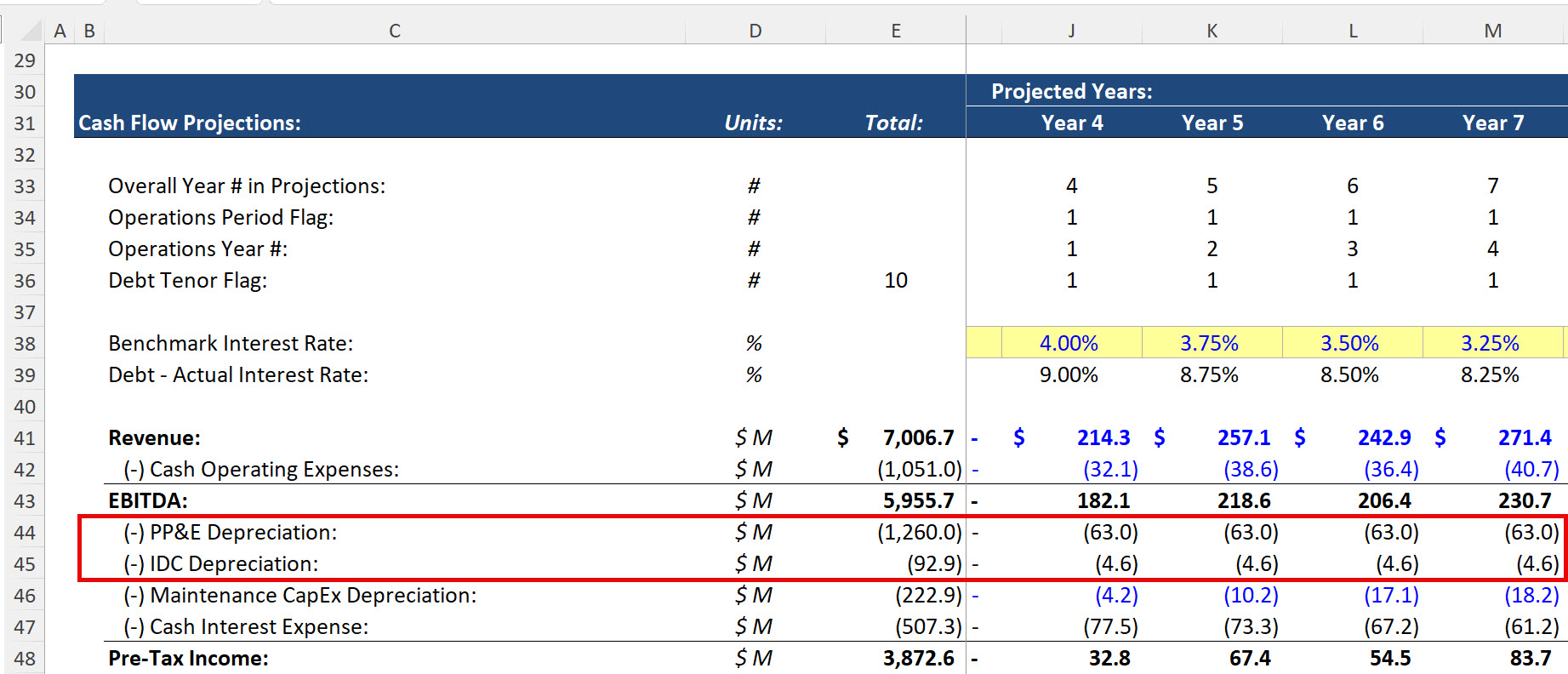
This tax deduction affects the Debt sizing and sculpting because it increases the Cash Flow Available for Debt Service (CFADS), so the asset might be able to support additional Debt once it becomes operational.
Does Interest During Construction (IDC) Create Circular References?
IDC can create circular references in at least three ways: 1) If the Average Debt Balance is used to calculate the Interest Expense; 2) If the Debt Draws are constrained based on the Maximum Debt Size; and 3) If the Debt Draws are constrained based on the Permanent Loan during the operational period.
The first method is the easiest to explain.
If you use the Average Construction Loan Balance over the period to create Interest, you will get a circular reference because the Construction Loan Draws now depend on the Ending Balance, but the Ending Balance also depends on the Loan Draws.
This was shown in one of the examples above:
To work around this, calculate the IDC based on the Beginning Balance in the period, as in LBO models and other Debt Schedules.
The next two issues are trickier to deal with.
If the Debt Draws are constrained, it means that in the “Debt Draw” formula, you add up the “remaining amount that can be drawn,” compare it to the amount needed in the period, and take the lesser of these two:
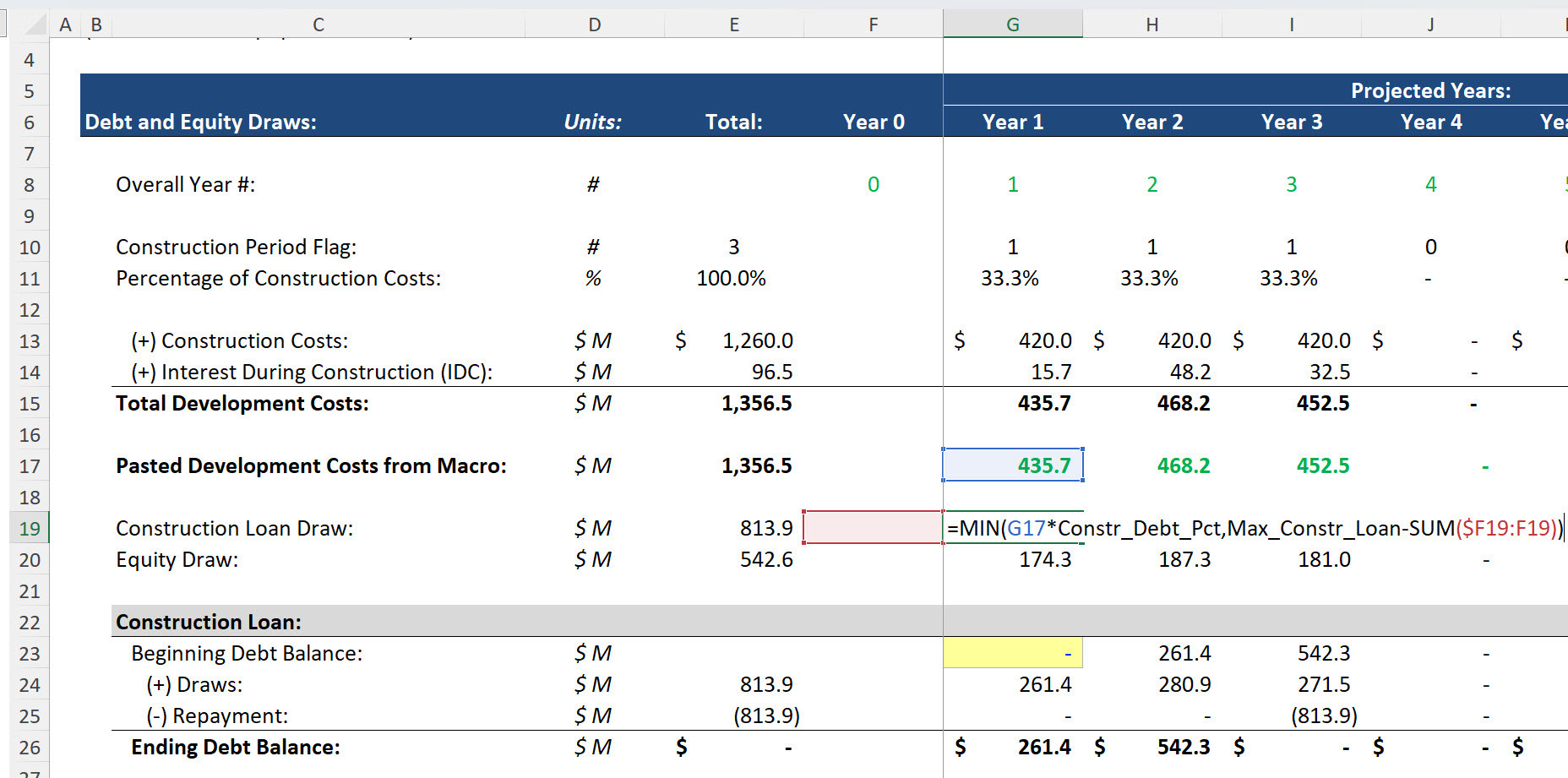
This creates a circular relationship because the Maximum Construction Loan (“Max_Constr_Loan” above) is typically a percentage of the Total Development Costs.
But this Maximum Loan Size also affects the Total Development Costs because loans of different sizes produce different IDC numbers… and the IDC adds to the Total Development Costs.
So, it produces a circular relationship in Excel unless you ignore this constraint in the formula.
If the Maximum Construction Loan Size is linked to the Permanent Loan during the operational period, you’ll also get a circular reference, but for more complex reasons:
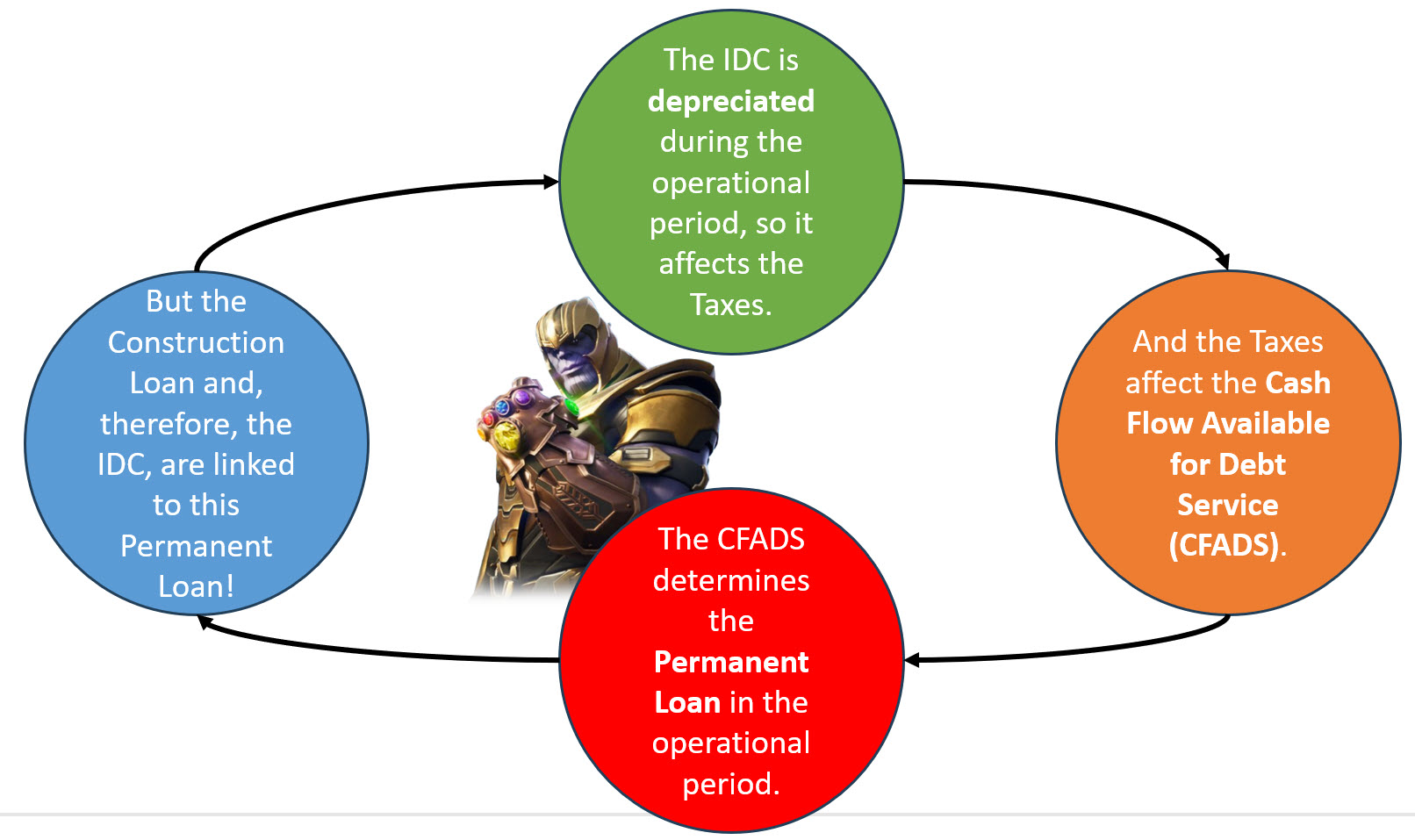
The key issue here is that the IDC from the development period affects the cash flows during the operational period… but those cash flows affect the Permanent Loan, and the Permanent Loan affects the IDC by constraining the Construction Loan, so it’s another circular relationship.
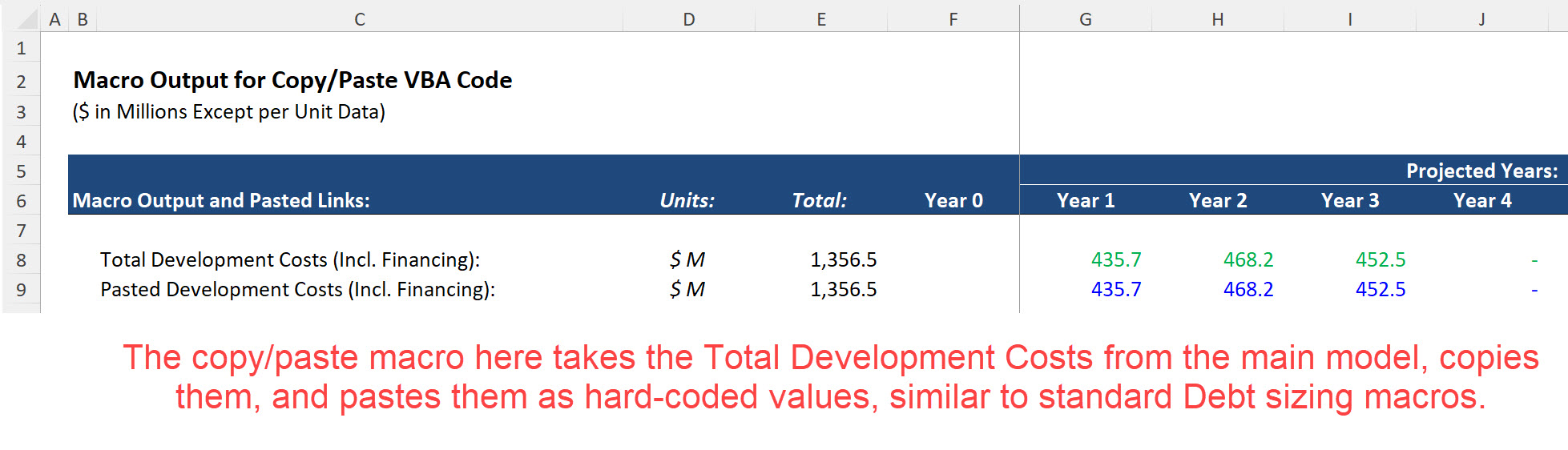
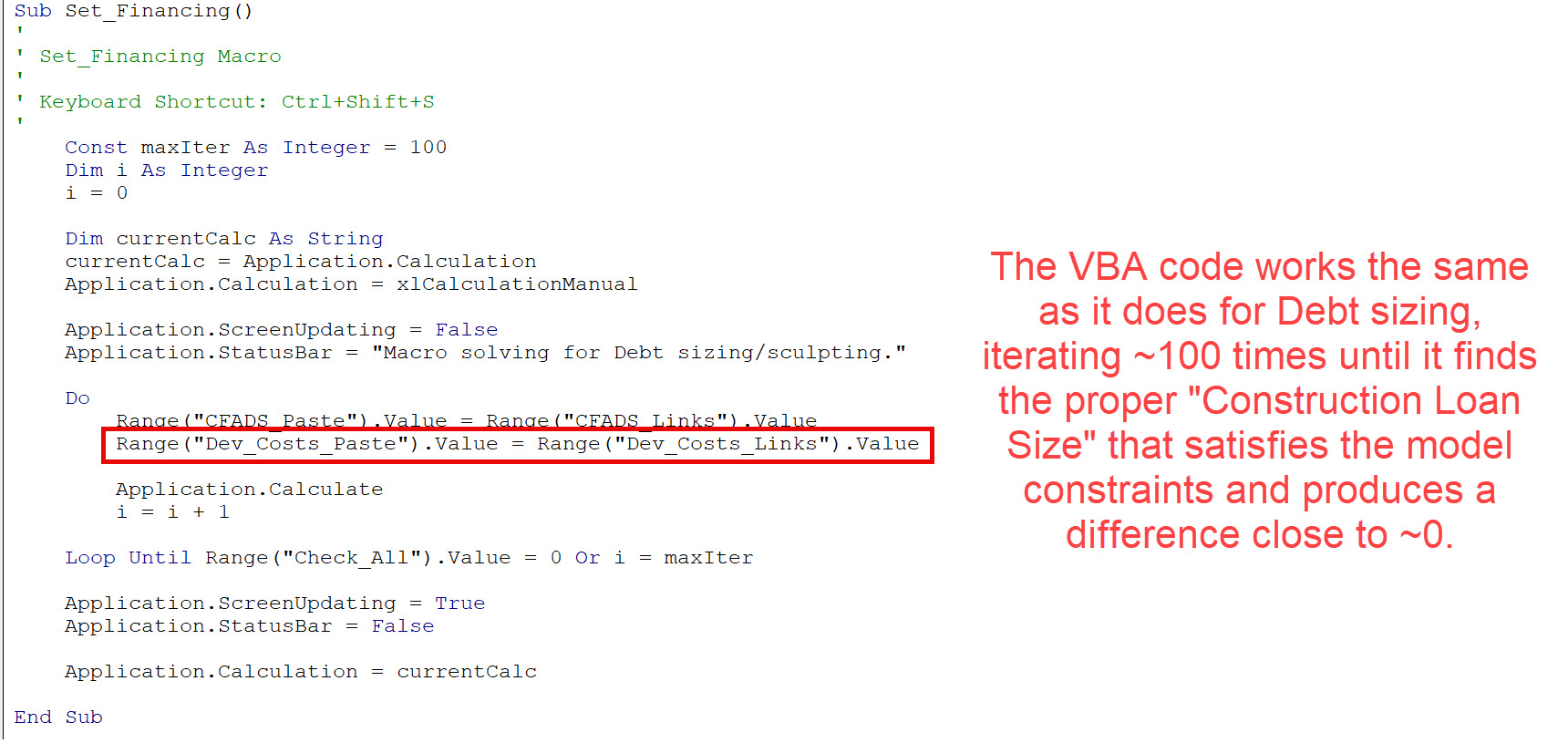
To resolve this one, the best approach is a simple copy/paste macro in VBA, similar to the ones often used for Debt sizing.
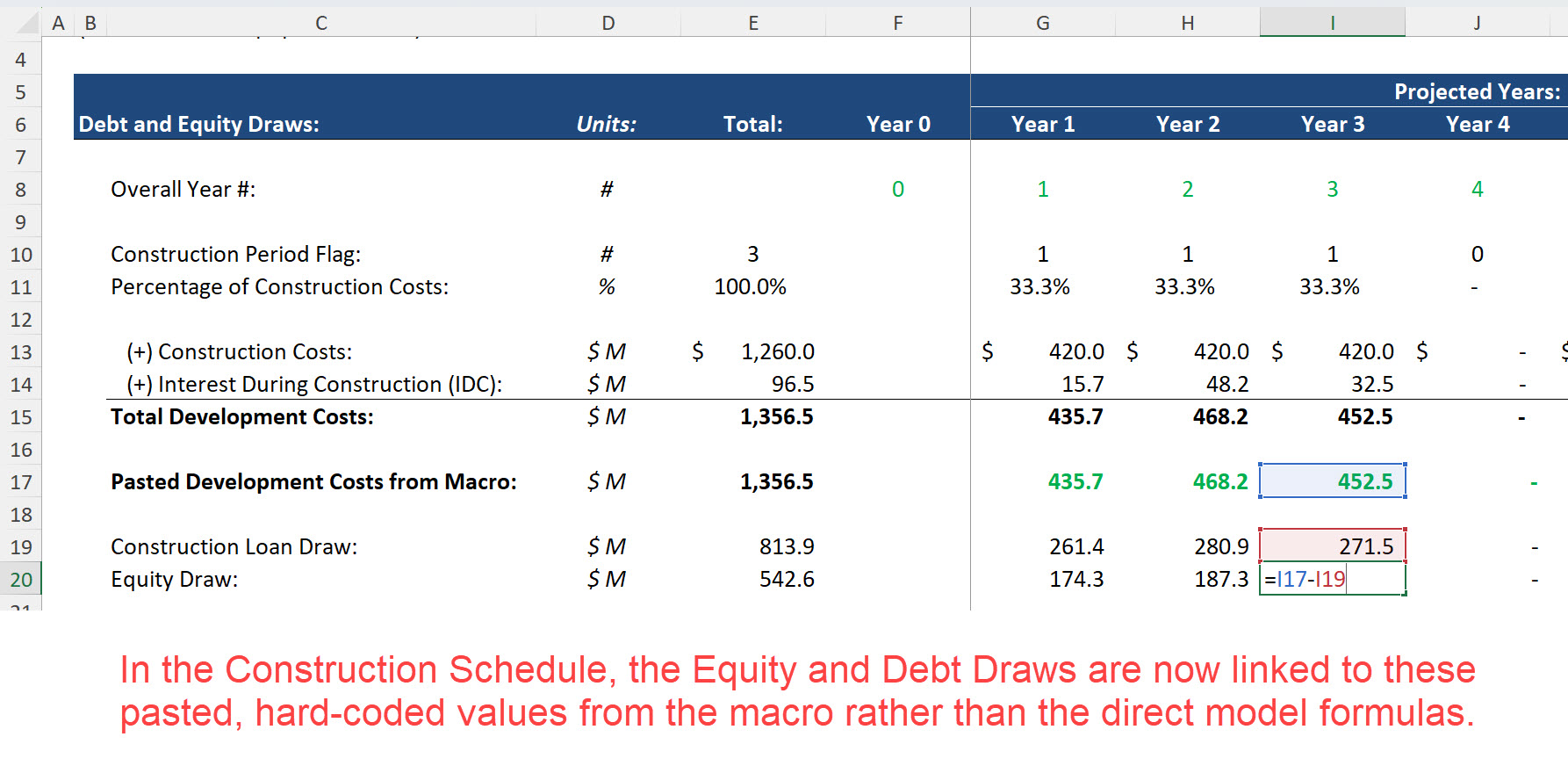
In this model, we add the Total Development Costs as another line in the “Macros” tab, update the VBA code to copy/paste this, and then link to the macro’s output in the “Constr” tab:
Does Interest During Construction Always Need to Be Repaid?
The short answer is “Yes, but not always at the same time – because not all development financing is always repaid when the asset becomes operational.”
Construction Loans are almost always refinanced and replaced with Permanent Loans, but other forms of financing, such as Preferred Stock, may not be.
Instead, these might persist into the operational period, but the Interest or Dividends on them will switch from “Accrued” to “Paid in Cash.”
Eventually, these financing sources will be repaid, but it might happen much later in the operational period, such as when another refinancing happens or the asset is retired.

About Brian DeChesare
Brian DeChesare is the Founder of Mergers & Inquisitions and Breaking Into Wall Street. In his spare time, he enjoys lifting weights, running, traveling, obsessively watching TV shows, and defeating Sauron.

